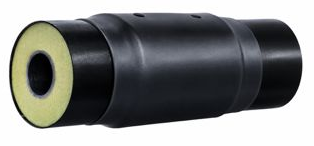
Heat-shrink joints protect connections between pre-insulated pipes and fittings in district heating systems. They are fitted over welded steel carrier pipe joints wherever individual pipes and fittings are joined to form the pipeline.
The joint provides mechanical protection at the connection and maintains continuity of the insulation and outer HDPE casing. It is made from high-density polyethylene. A correctly installed joint prevents moisture from reaching the insulation, protects the weld against external influences and helps maintain the specified thermal, mechanical and operational performance along the pipeline.
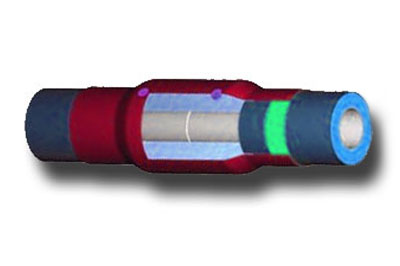
A heat-shrink joint consists of:
- A non-cross-linked or cross-linked heat-shrink polyethylene sleeve
- Installation and sealing materials: CANUSA heat-shrink tape, butyl mastic tape, overlap tape, vent plugs, conical plugs, plug seals (FOPS), wire spacers and wire connectors
- PUR components, in quantities determined by the joint size
Standard heat-shrink joints match pre-insulated pipe casing outside diameters from Ø90 to Ø630 mm. Sleeve lengths are 600 or 700 mm.
Heat-shrink joints are installed after the carrier pipes have been welded and the welds inspected. When heated, the heat-shrink components fit closely over the HDPE casing to form a strong, sealed and mechanically stable connection. Once prepared, the space between the steel carrier pipe and the outer HDPE casing is filled with rigid PUR foam to restore the insulation layer.
The quality of heat-shrink joints directly affects the reliability of the district heating system. Joints are particularly vulnerable to water ingress, loss of insulation performance and subsequent damage. Pay particular attention to surface preparation, joint positioning, seal inspection, even filling of the insulation space and final inspection. Pipe surfaces must be clean and dry, and the joint must be positioned and heated in accordance with the manufacturer’s instructions. Incorrect installation can allow moisture to enter, damage the insulation and shorten the life of the pipeline.
Heat-shrink joints must remain watertight and stable over time when installed underground, while resisting thermal and mechanical loads. They give the connection technical characteristics consistent with the factory pre-insulated pipes and fittings. They are used both on new pipe runs and when repairing or replacing existing joints.
TERMO PLUS manufactures, tests and marks heat-shrink joints in accordance with EN 489, the European standard that defines requirements for their manufacture and installation in district heating systems. This helps ensure reliable joints, protection of the insulation and a long service life for the network.