
Expansion cushions accommodate thermal expansion at U-, Z- and L-shaped sections, bends, branches, reducers, shut-off valves and end closures. They are also used near expansion devices and anchors, where the pipeline changes direction, and at its highest and lowest points.
District heating pipelines operate at elevated temperatures and pressures. Thermal expansion can cause considerable axial, lateral and angular stresses, leading to deformation, cracked joints, damage to insulation and a shorter service life. Expansion cushions accommodate these movements in a controlled way and reduce loads on pipes, welded joints, valves and associated equipment. By absorbing longitudinal pipe movement, they reduce forces on anchors, limit excessive stress, dampen vibration and noise, and help prevent damage and failures. This improves reliability and reduces maintenance costs.

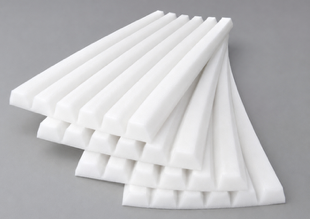
Expansion cushions are made from expanded polyethylene resistant to degradation and chemicals. They are 1000 mm long, with a thickness of 40 mm, and a density of 30 ± 4 kg/m³. If calculations call for greater thickness, two or more cushions can be heated with a flame and bonded together. A laminate strip can be added to prevent soil or sand from getting between the pipe and the cushion.
Select the cushion type on the basis of engineering calculations and operating conditions. Consider the calculated thermal expansion, carrier pipe diameter and weight, maximum operating temperature, design pressures and environmental conditions.
The most commonly used expansion cushion types are:
- Type I – 40 × 120 × 1000 mm
- Type II – 40 × 240 × 1000 mm
- Type III – 40 × 360 × 1000 mm
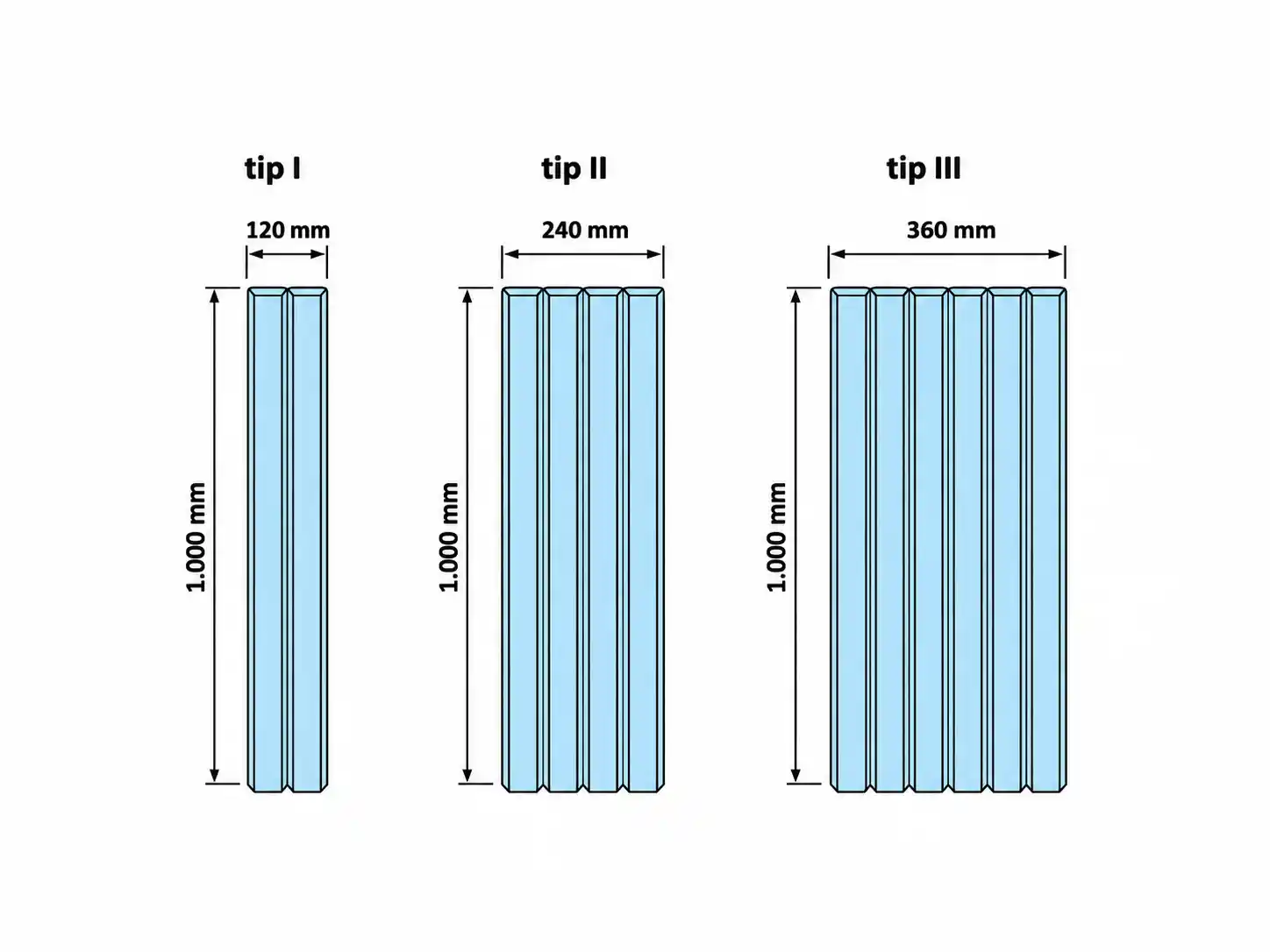
The outside diameter of the pipeline determines the required cushion width. Seven types of expansion cushion are available:
|
HDPE pipe (mm) |
TYPE |
Expansion cushion width (mm) |
|---|---|---|
| ø90 – ø160 | Ⅰ | 120 |
| ø180 – ø280 | Ⅱ | 240 |
| ø315 – ø355 | Ⅲ | 360 |
| ø400 – ø500 | Ⅳ | 480 |
| ø560 | Ⅴ | 600 |
| ø630 – ø710 | Ⅵ | 720 |
| ø800 | Ⅶ | 960 |